Puttnies' commentary can quickly irritate, but with prolonged listening real expertise emerges. The film shows how cultural warfare itself damages culture.
more...Trailer
About the Film An essay film by Hans Puttnies
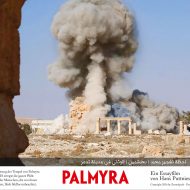
In the summer of 2015, the famous temples of Palmyra in Syria were destroyed by the "Islamic State". Most people did not realise that an even greater crime was about to begin: the Assad regime ruthlessly bombed the modern town of Tadmor right next door and turned the families who had lived off the monuments into refugees in Europe.
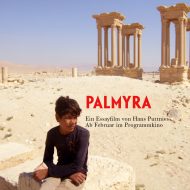
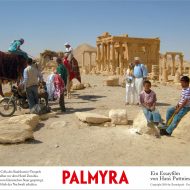
In the politically engaged film "Palmyra", Hans Puttnies takes the side of these people. Before the war, he was the only one to film the afterlife of antiquity in Palmyra: archaeology and dictatorship in harmony with educational tourism. His feature-length essay film critically traces the path that led to the exalted "World Heritage" — used during the war as propaganda by all sides — and yet was the beloved home of many people.
Film StructureThe Film in Eight Chapters
Chapter One
Going There and Seeing
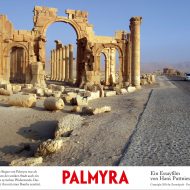
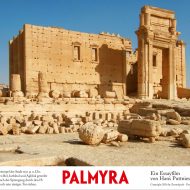
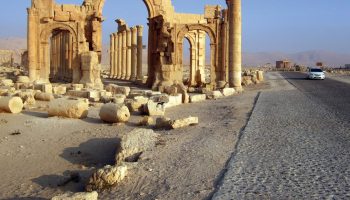
A man walks alone with his camera past enigmatically beautiful temples and colonnades stretching far into the desert landscape. He does not suspect that he is preserving a visual experience that can now only be had in this film. Palmyra was largely destroyed in the war in 2015.
Chapter Two
Reading in Images
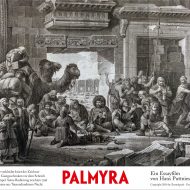
In the 18th century, the ruins of Palmyra were a kind of mirage conjured by antiquity-obsessed gentlemen through copperplate engravings. The many reproductions of their images then solidified the idea of an enchanted city just waiting to be kissed awake by Europeans.
Chapter Three
Comprehending a Temple
Whoever entered the ramp to the cella of the Temple of Bel became aware of their own religious insignificance and could still feel the gods in the fallen ornaments. Yet the temple precinct had also been an Arab small town for centuries, dismantled without a trace by archaeologists.
Chapter Four
Excavating and Possessing
The amateur archaeologist Wilhelm II ensured during World War I that German researchers could examine Palmyra for the first time. The victorious French then excavated the ruins and, together with other European nations, restored them into the touristically successful "World Heritage Site."
Chapter Five
Downloading a War
In the crusade of the Islamic State, the temples and tower tombs fell before Palmyra was recaptured for Russian propaganda and lost again. We experienced all this through the media as a battle for our cultural values, while the people on the ground died and their residential city Tadmor was destroyed by bombs.
Chapter Six
Experiencing and Transmitting
The gold of Palmyra's dead mostly fell into the hands of grave robbers as early as the Middle Ages. Only the modern art trade also exploited the ancestral portraits from the tower tombs and elevated them to the status of precious artworks. Thus ennobled, ISIS could exchange them for machine guns.
Chapter Seven
Telling Legends
Zenobia was briefly queen of the Palmyrene Empire and ended up in Roman captivity. But the legend of her alleged rebellion was exploited for books, operas, paintings, and films. The Syrian state now uses her as a propaganda statue for its "monument protection."
Chapter Eight
Making Friends
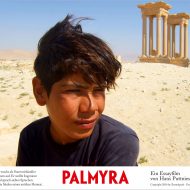
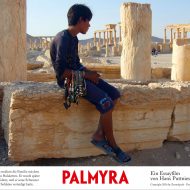
A drive through the peaceful streets of Tadmor cannot record the horror that prevailed next door in the city's notorious torture prison. Later, the 15-year-old souvenir dealer Mohamad describes his life among the ruins so vividly that one understands antiquity for the first time as his home.
ReviewsPress Reviews of the Film
Palmyra, the Soul of the Syrian Nation
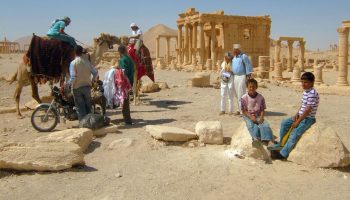
The strongest moment: a motorcycle ride through Tadmor with 15-year-old Mohamad, who describes the ruins as part of his own identity.
more...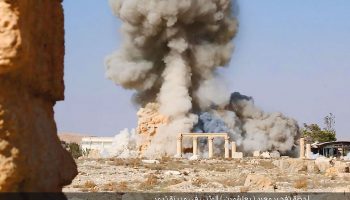
Palmyra — A Review
The film transforms from a travel documentary into a critical examination of which concept of history we actually hold.
more...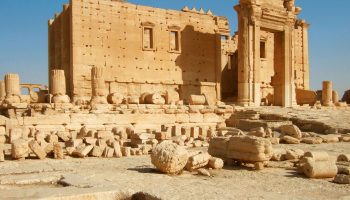
Palmyra: The Dark Side of the Oasis
The oasis paradise of Palmyra was made into something it never wholly was. The film shows how the people there were treated.
more...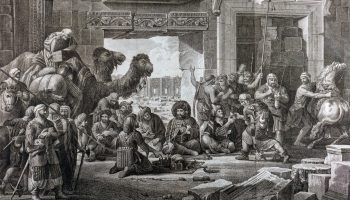
Palmyra — A European Myth
A compelling study of aesthetic, enlightened European colonialism — the production of the myth erased the living present.
more...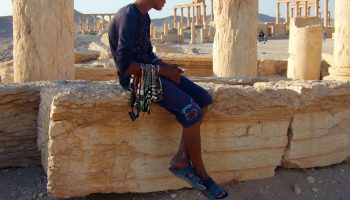
Palmyra — Film Review
Puttnies contextualizes multiple temporal layers, each producing its own loaded imagery — including the forced relocation for Louvre excavations.
more...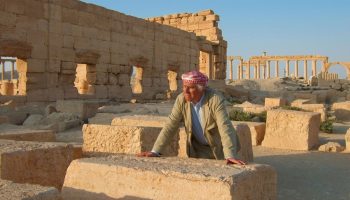
On the Trail of the Stones
Puttnies deconstructs the concept of World Heritage and shows: its preservation itself meant destruction — the demolition of Arab structures.
more...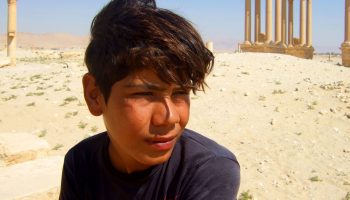
Trailer & Review: Hans Puttnies Reflects on Palmyra
The essay film invites viewers to reflect on the ancient Syrian city and what we have lost through its destruction.
more...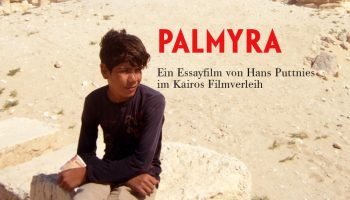
Review of Palmyra
The film offers ample material for reflecting on the connections between antiquity, colonialism, World Heritage, and the present-day civil war.
more...Palmyra — Film Review
An essayistic documentary with culture-critical self-reflection from a Western perspective. The contradiction between enthusiasm and indifference.
more...Palmyra (2016) — Film Review
Puttnies traces Western interest in Palmyra's temples back to 18th-century expeditions and exposes the displacement of its inhabitants.
more...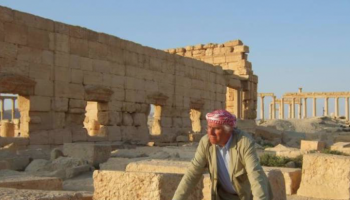
Film in Conversation: Former Darmstadt Media Culture Professor Hans Puttnies Brings "Palmyra" to the Rex
The ruined city of Palmyra has become a symbol of cultural barbarism. The fact that the ruins of the city of Tadmor stand right beside it is hardly noticed.
more...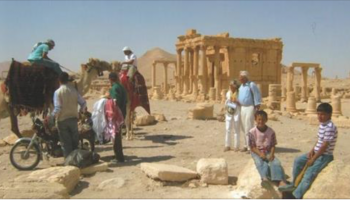
"Palmyra" Holds Fast What Once Was
In his film, he combines shaky camera footage from back then with cruel Daesh propaganda videos — creating a powerful document of its time.
more...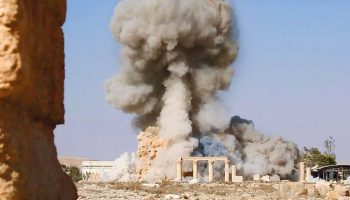
"Palmyra": A Film About What Was Lost
When Hans Puttnies visited the ancient city of Palmyra in 2008, he had no idea he would one day hold a unique document of its time.
more...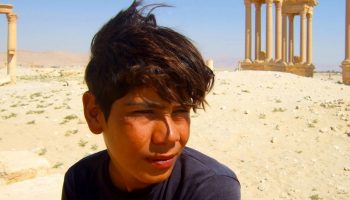
Phantasm and Curse of the Destroyed Desert City
"Palmyra" is the work of someone at once loving and despairing — for Puttnies weighs the death of people more heavily than that of buildings.
more...


Kontakt
Produktion
Write to Us
Wird gesendet...
Bitte füllen Sie alle Felder aus
Bitte geben Sie eine gültige E-Mail-Adresse ein
Beim Senden ist ein Fehler aufgetreten
Your Message wurde gesendet